

Have you ever wondered how Japanese green tea was made ?
Today , I would like to share a story with you. The story of green tea made from leaves to the delicious beverage that we all know. I’ve got lucky to be invited at Mister’s Takahiro tea factory for the day. We are in Japan , in the Shizuoka prefecture , which produces the biggest amount of green tea in the country. Nestled between the mountains of Shimizu , near a river and between the tea fields , there is an old tea factory and a man. Follow me on that adventure with Camellia Sinensis , the tea plant.
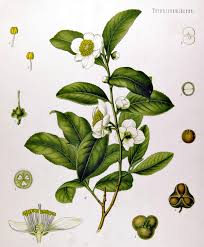
Camellia Sinensis
Tea was first grown and consumed in China. It is not until Zen Buddhist monks from Japan traveled in China , that tea culture starts to emerge in the land of the rising sun. Monks at the time find out that drinking this beverage was giving them clarity of mind and enhanced concentration which was very practical for their daily meditations. Hence it was treated as a sacred plant. The Japanese monk Eisan brought back the precious seeds in the 13 century. This is from then that the tea culture started in Japan , first with powdered green tea known as Matcha and later on with Sencha (and many other types). Let’s go back to our farmer now , Yutaka san.
Let me first introduce this man before we dive into tea making processes. Takahiro Yutaka is an energic 67 year old tea farmer which has a strong passion for green tea. His father was himself tea farmer. His son , Jiro san also is a tea farmer. You can tell that tea is a love affair in the Takahiro family. I’m currently working with the son , Jiro san , who has a big tea factory builded 20 years ago. The father , Yutaka san didn’t wanted to be part of the big tea scene anymore and sold his parts to his son. Now Yutaka is working on his own in his small tea factory with very old machines. He is focusing on making high quality product rather than large quantity. In fact , smaller machines will allow the farmers to make less tea batch at the time but the quality will be superior. Let’s take a closer look.
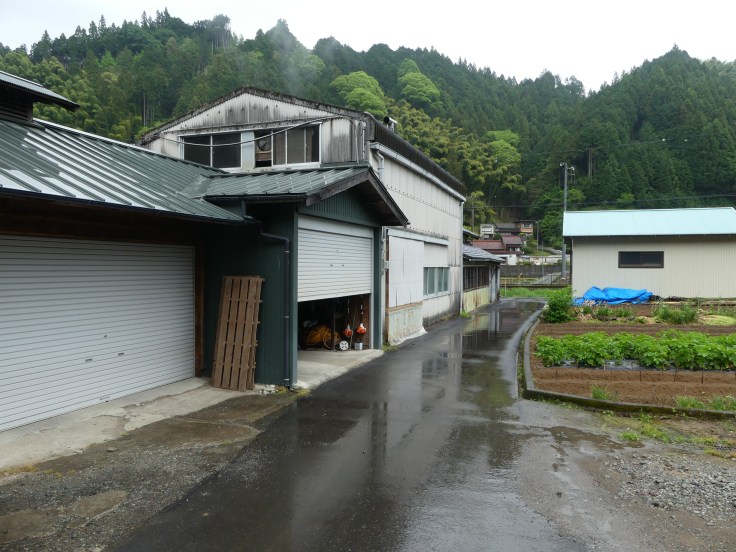 Yutaka san artisanal tea factory. The name of his brand is «Houkouen».
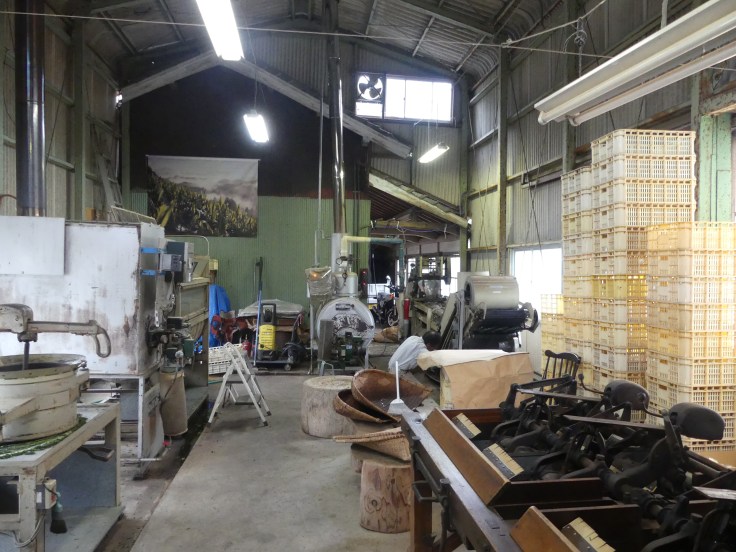 Welcome to the LAB ! This is where all the magic happen. We will be making Sencha today (the most common type which represent 70 % of the national production of green tea).
After three weeks working at the tea farm , cutting huge quantity of tea leaves every day , I got very curious about what were the following steps. In Japan the tea industry is fully modernized therefore the processes are very reliable and accurate. The most recent tea factory are fully automated using conveyer belt system and computers but the one at Yutaka’s san artisanal factory was not one of this kind. Rather , an old school factory with old machines which demand more physical work to move the tea leaves from machine to machine.
Talking about machines , they are six of them where the tea leaves have to go through in order to become the final product.
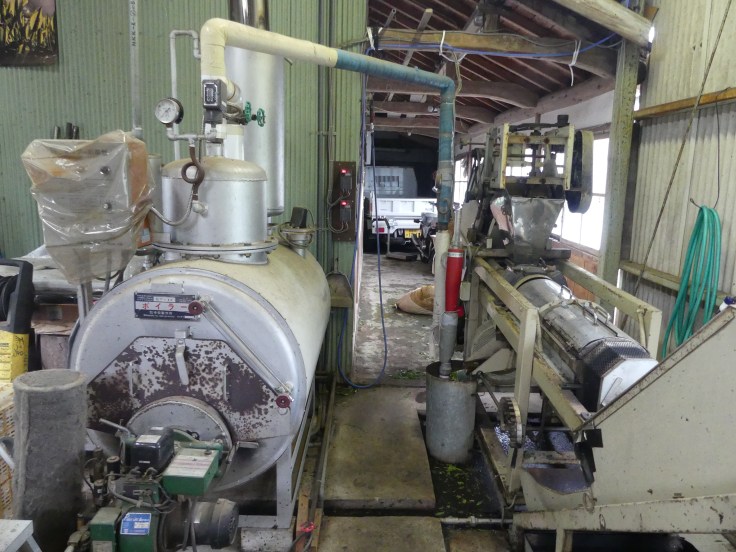 This one will basically steam the leaves for 30 seconds.
This process is also called «Asamushi» or light steam which is more common in mountain grown tea. The other method is known as «Fukamushi» or deep steaming which last for about 60 second instead of 30. Low altitude tea are usually steamed with the «Fukamushi» method. The method used will have a big impact on the final taste. The container on the left will blow hot steam to the right machines , enabling the freshly picked leaves to be steamed.
Why are we steaming leaves actually ? In order to de-activate the oxydase enzyme which is responsable of «aging» the tea. To make green tea we want our leaves to be as fresh as possible meaning the minimum oxidation. If we wanted to make black tea then we will let the leaves wither and oxidise which will ultimately change their color and the aroma.
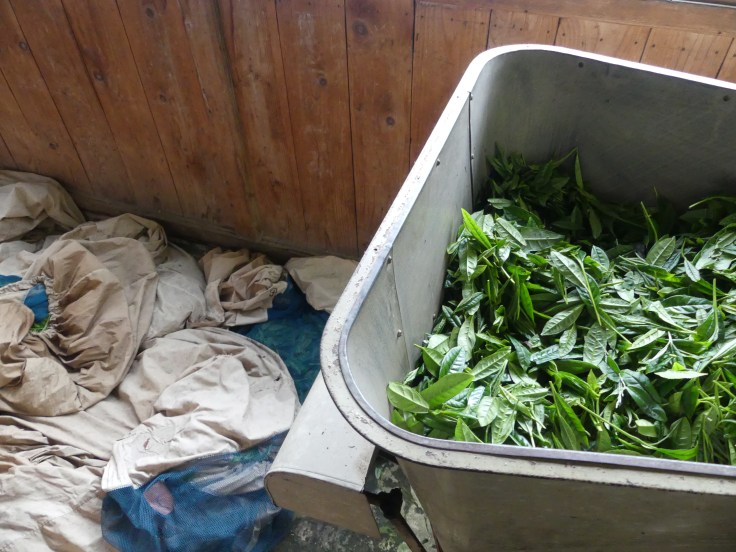 From the tea bags to our first step , the steaming.
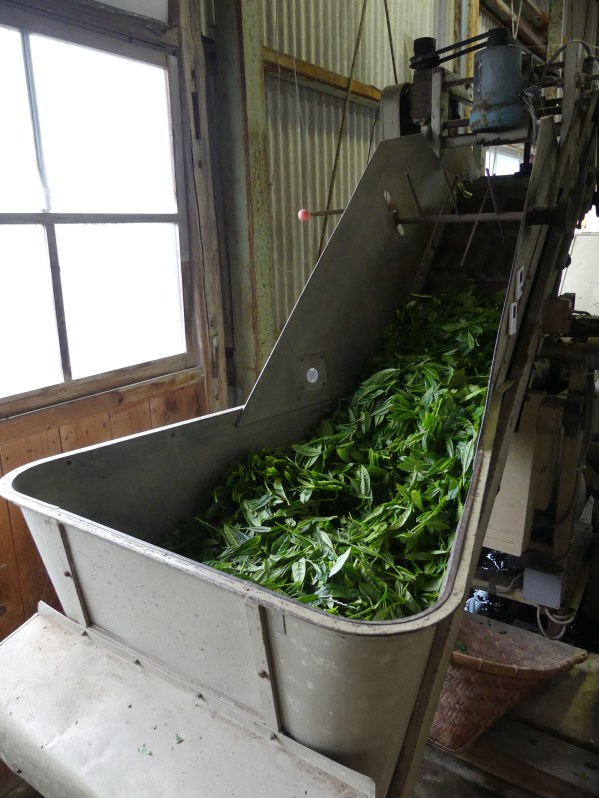
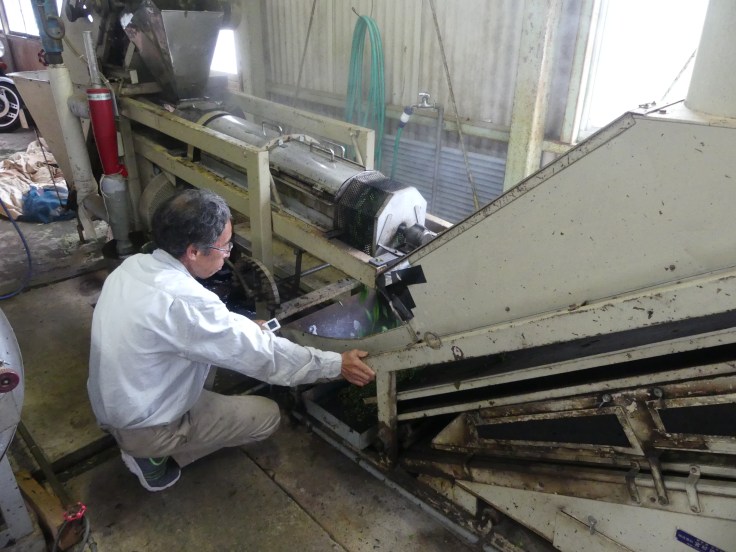
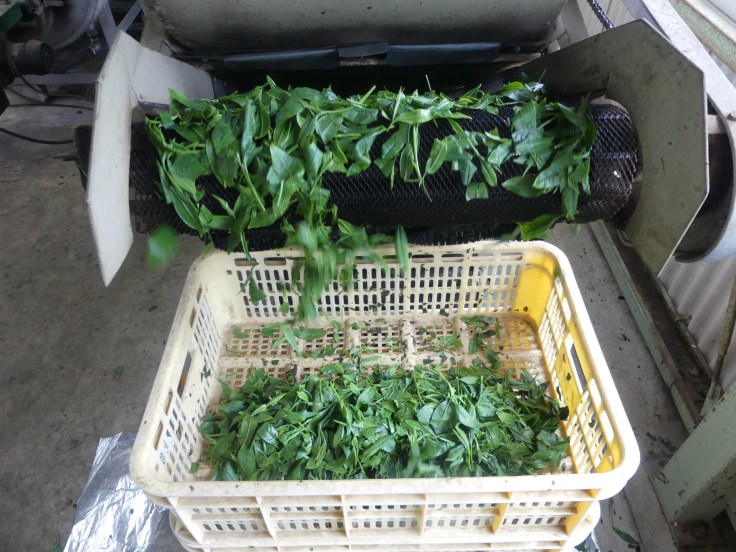 Once steamed the tea leaves will end up in baskets where they are ready for the second step , drying. At that stage there is about 70-80% of water content in the leaves.
At that stage the tea leaf mass is mostly made up of water. So our aim of today will be to reduce as much as we can the water content in order to create a stable and long lasting product.
Once steamed the tea leaves will end up in baskets where they are ready for the second step , drying. At that stage there is about 70-80% of water content in the leaves.
At that stage the tea leaf mass is mostly made up of water. So our aim of today will be to reduce as much as we can the water content in order to create a stable and long lasting product.
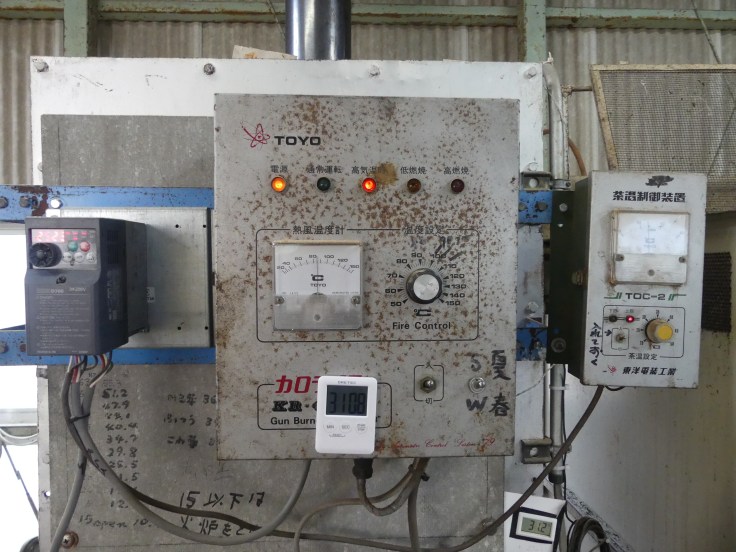 A world of machine creating a chaotic wet hypnotising symphony. A strange audio signature , far away from the Zen tea ceremony that I came across. A world of contrasts. To make Zen moment with tea you first need to go through a noisy mechanical symphony.
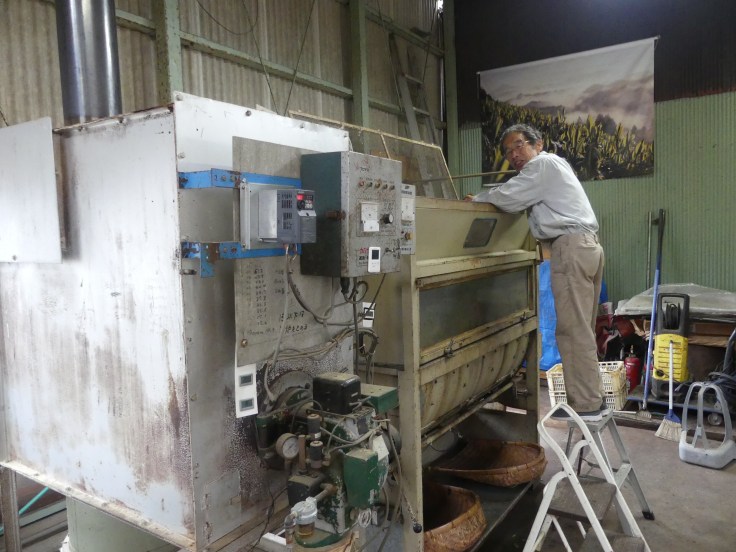 This is the first drying machine. The process takes an hour and all the following steps also take about an hour. If you make the math it should take 5 hours in order to create the final product. Being a small tea factory , only 40 kg of fresh tea leave can be process at the time which mean that the operations need to be repeated as long as we have more tea leaves to come.
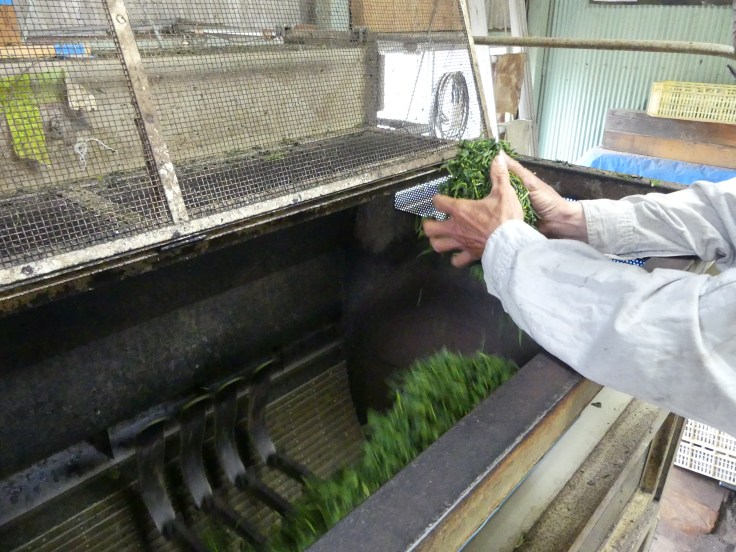
Checking the constistency of the leaves. This checking was done almost every 2 minutes in order to find the perfect timing of desired dryness.
Next step is the pressing and rolling. In this section we will remove excess water and equalize the water content of leaves and stems. This process also allow to extract some of the inner flavors.
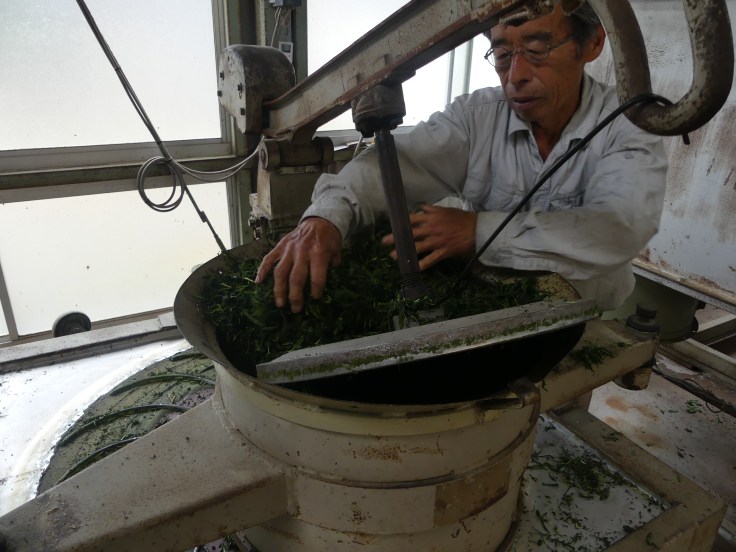
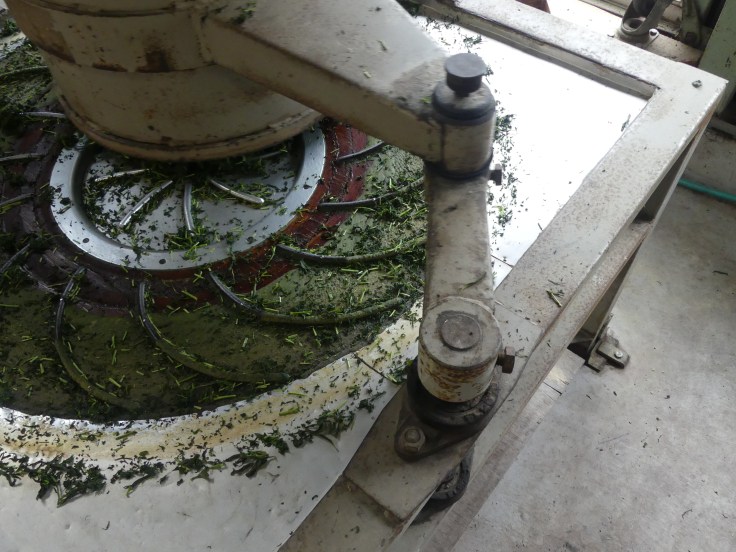
The machine rotate clockwise.
Next step is another drying. After this step we hope to reach 10% of humidity in the leaves. Remember we want the water content to be as low as possible to reach optimum shelf life. Humidity is one the main danger for tea as it will strongly affect the flavor and simply, make it spoil and unpleasant to drink.
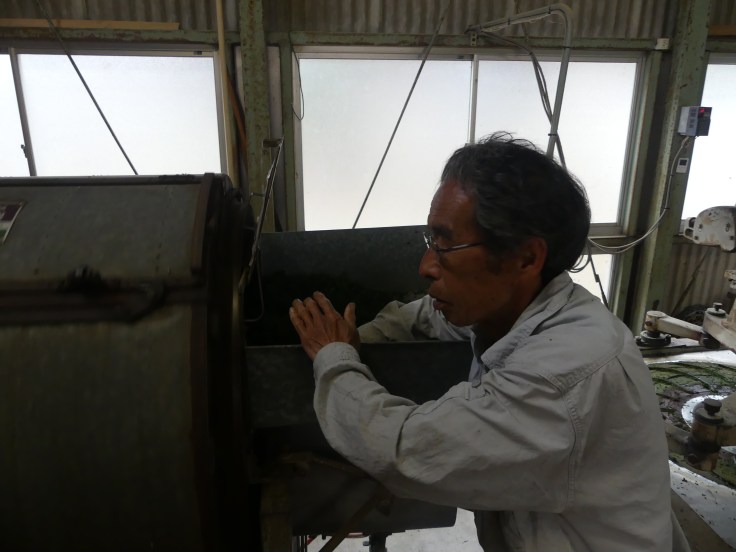
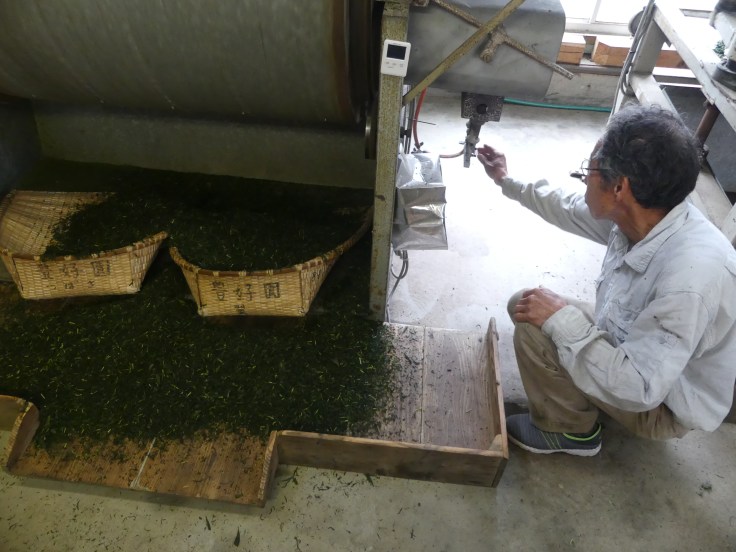 The second drying is finished. It is now time to move to the next machine. The following one is quite interesting.
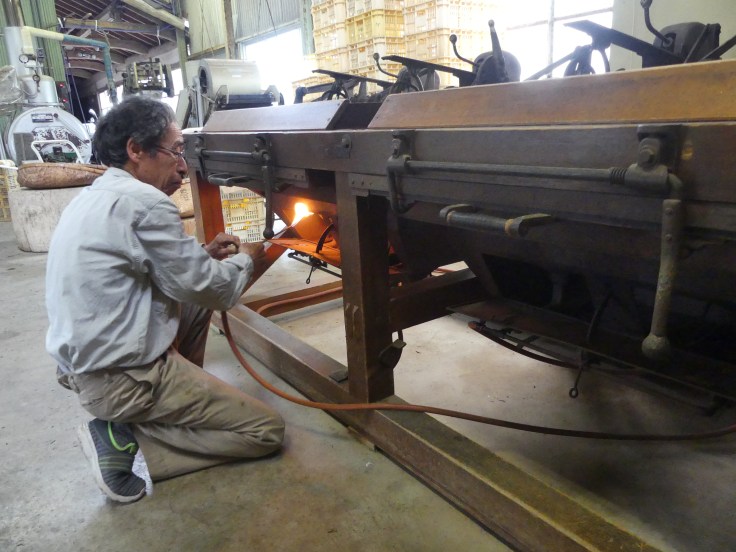 First we light up the gas. This machine have 70 year old and used to use charcoal instead of gas.
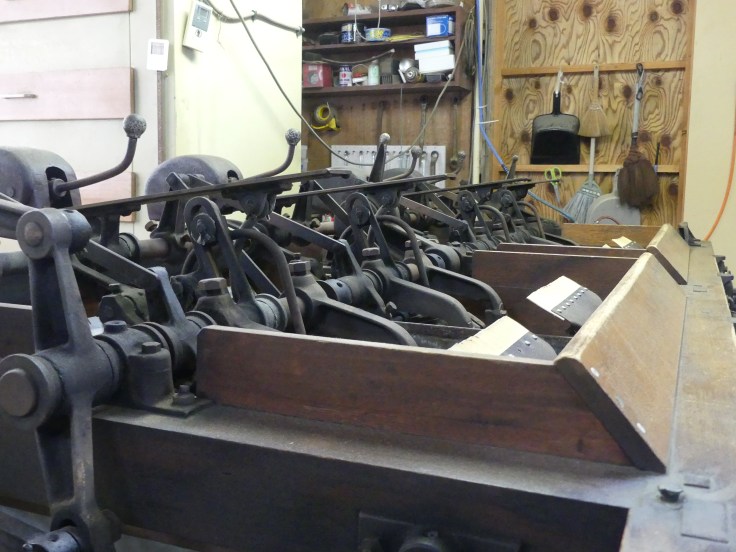
The beast which appeared to me like some sort of Mechanical Centiped..
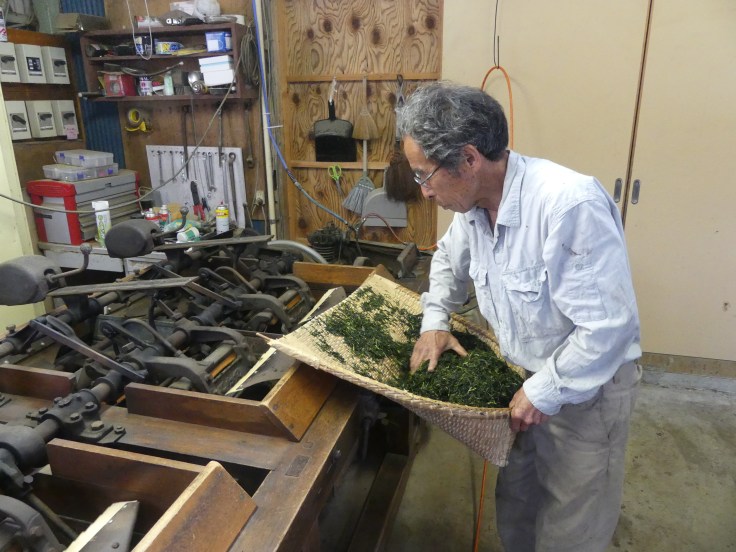 Bit by bit we are adding the leaves in the machine.
This one will be responsible of shaping and rolling the leaves. Again ,in order to remove excess humidity and extract more flavor.
Bit by bit we are adding the leaves in the machine.
This one will be responsible of shaping and rolling the leaves. Again ,in order to remove excess humidity and extract more flavor.
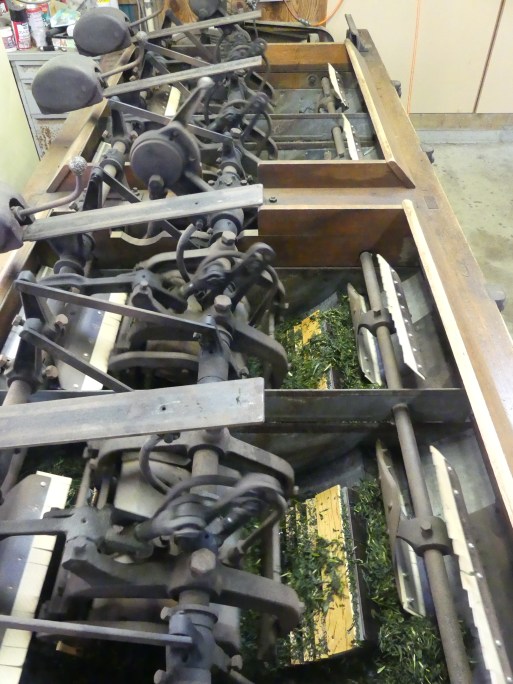
Mechanic Symphony in T Major.
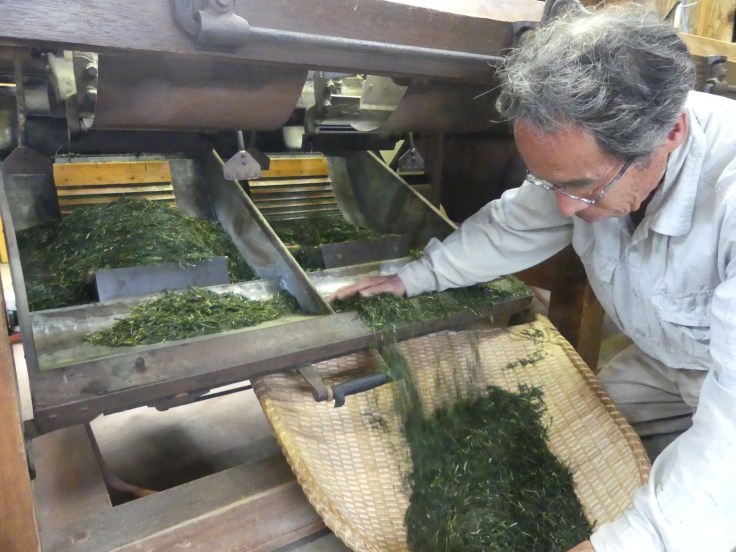 This is done ! Which leads us to our final step , more drying !
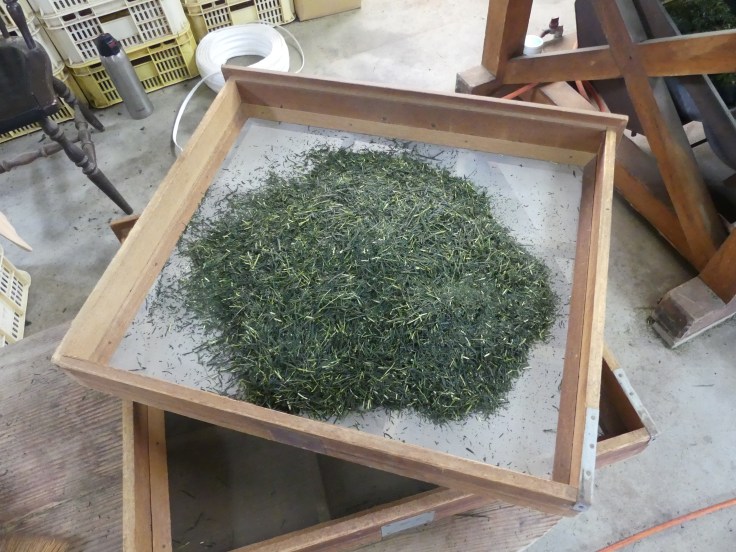
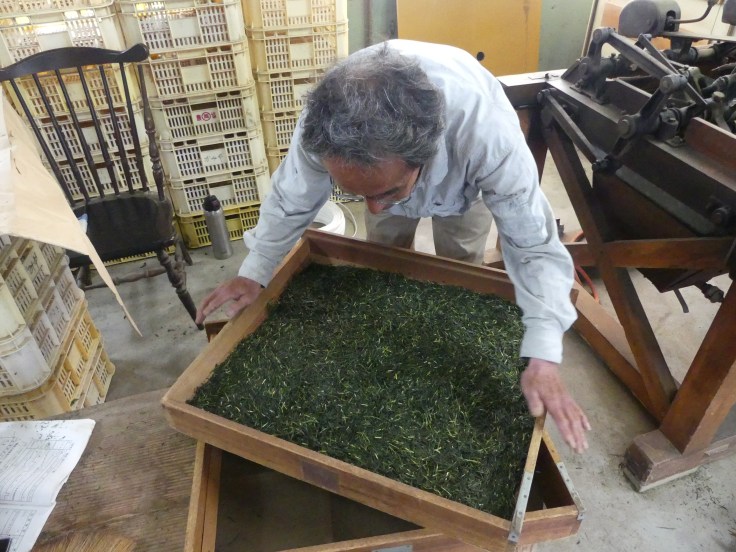 The leaves will now go in a small hoven for final drying. After this step they should be as low as 3-5 % remaining humidity which is consider desirable.
This is it , we have our final product. Well , at that stage it is called «Aracha» which stand for «Crude tea». They will be a final step which will separate the leaves from the twigs. It is only after this separation that the tea will be sold. Thereafter the remainings twigs can be roasted and sell as Kukicha or process in other kind of tea. The leaves will be sold as Shincha (first flush tea of the year).
There is usually three harvesting time in the year. Starting in Spring (Shincha) , followed by Summer , and then Autumn. The later the harvest , the less interesting the taste profil becomes. The fresh tea leaves from Spring are considered the most valuable as they are full of flavor , richness and vitality. The taste is sweet and Umami and packed with L Teanine amino acid , which contribute to create a feeling of relaxed yet concentrated mind. I adore this Shincha beverage as it gives energy and clarity of mind , plus it taste awesome. The cafeine content is also high but the L Teanine act as a buffer which result in a more stable «rush» unlike Coffee which doesn’t have L Teanine. I cann’t drink coffee due to the amount of cafeine inside but I tolerate the cafeine in Tea thanks to L Teanine.
Usually Shincha represent about 80% of the yearly income of farmer. But Yutaka san is doing it is own style. He only harvest one time a year his tea bushes meaning he only produce the Shincha. This approach is rather unusual but he favors the quality of his bushes rather than the quantity. Ultimately this means that the tea bushes will have more time to rest throughout the year while increasing their inner potential and vitality.
From all the cultivars or breeds , the Yabukita cultivar is the most popular in Japan which represent something about 80% of the tea plantations in Japan. It has been choosed in favor of other breeds because it is a stable , resistant and produce large amount of leaves. This decision making allow a stable income for farmers but on the other end , the tea taste profile become quite all similar as they all come from the same tea cultivar , Yabukita. Yutaka san, again has is own style. He grows about twenty different cultivars with very interesting profile. He considers himself «crazy» and is loving it. He is like an artist , a chef and a Lab person at the same time. At the moment he is experimenting by creating new tea breeds. This is really awesome because thanks to his style the tea scene in Japan gets more exciting. Although he produce very small quantity and his tea are very expensive because of the superior quality.
Chef Patissier Pierre Hermé , which is famous worldwide for his outstanding Macaron , came a few times to visit Yutaka’s farm. The Patissier wanted to create a green tea macaron and wanted the best of the best. Hence his visit to the remote tea plantations of Shizuoka.
 The master of Macaron.
At the end of our session I could enjoy some tea with delicious sweet at their tea store.
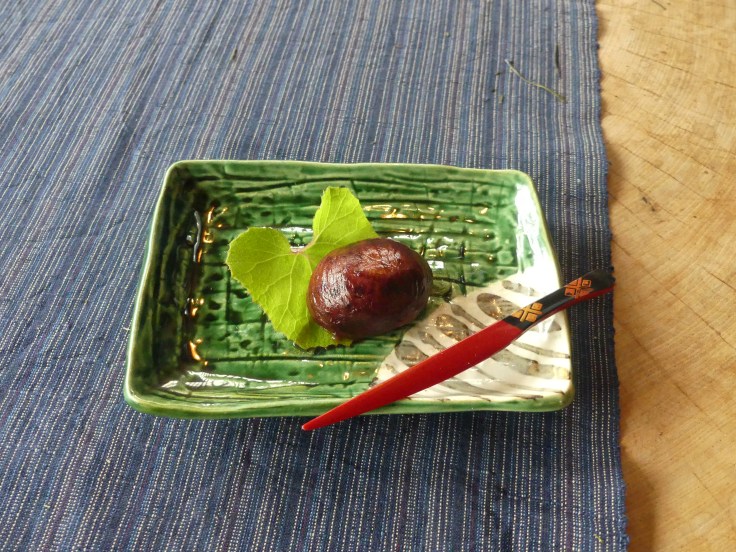 Matcha and sweet set.
I have met the wife of Yutaka and some neighbors. Everyone was very friendly and we had a good time. I love this tea community. A woman did the Sado or Matcha preparing training , so that she could prepare delicious Matcha for us and explain us some of the philosophy being the gestures. I couldn’t resist but to buy and to brew myself some of their high-end tea.
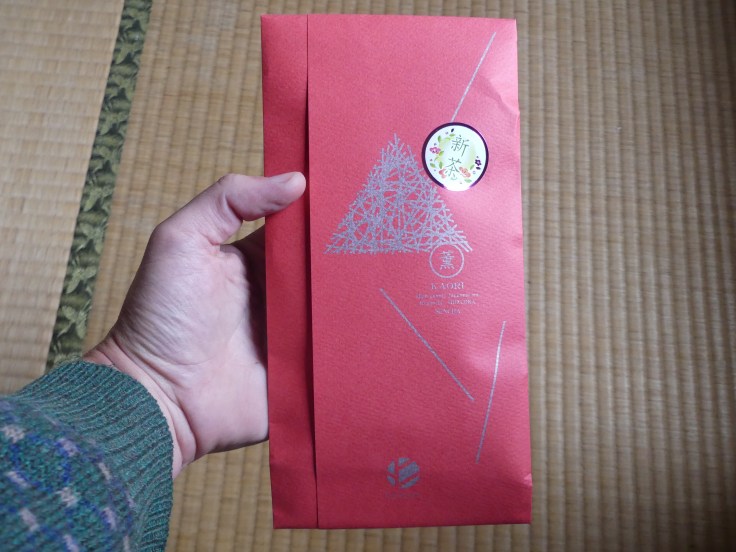 First flush Sencha (Shincha) using Kaori Midori cultivar from Houkouen shop. Price at 1620 yen (14 euro) for 80g. We are talking about Roll Royce tea here hence the high price tag. I’m looking forward to brew the precious leaves.
So this is it. Our small tea journey is reaching the end. There is a lot to be said and I just scratched the surface of this immense topic. I hope you could learn something and get inspired by this community of passionated people. I hope you can try some nice Japanese green tea where you are. Stay away from the tea bags as they are made from the remaining powder meaning a low quality , unpleasant taste and fewer health benefits. Rather , get yourself loose leaf tea from the local tea shop and have some fun brewing your own tea. Create moment for yourself and for your surrounding. Experience till you find the perfect brew for your own taste.
May this wonderful beverage helps you and others find more happiness and clarity.
I shall continue my tea experience in Shizuoka for some more months. They is a lot more to learn and that’s why i’m here. Travelling is also about finding some usefull knowledges and ancient wisdoms to bring it all back home to enrich your life and the one of your relatives.
 free.cloud
Leave a comment